Beyond 100 Meters: When Extended-Reach Copper Makes Sense
Extended-reach copper can help solve connectivity challenges beyond 100 meters. Explore the benefits, tradeoffs and options...
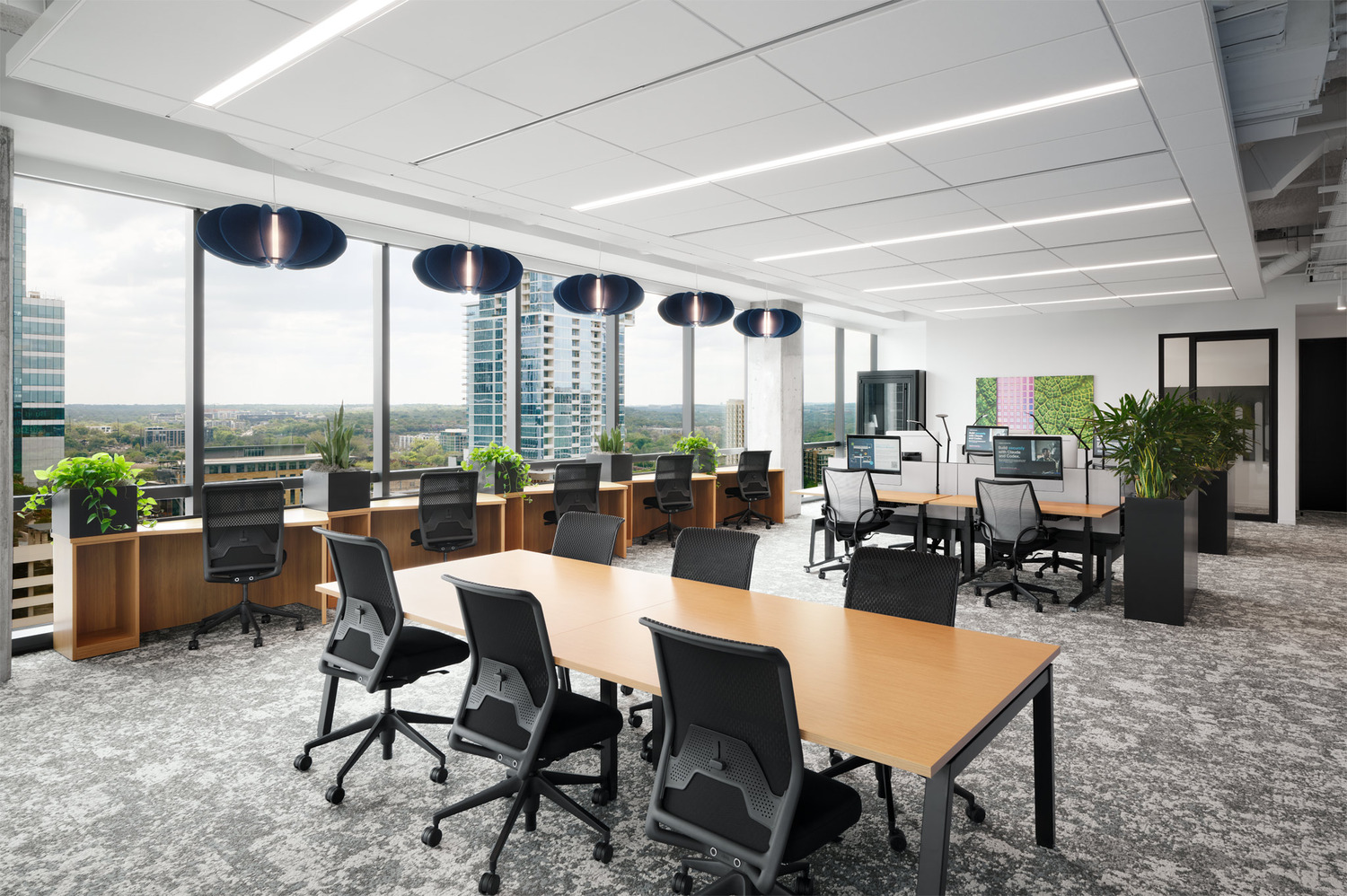
Across EMEA (Europe, Middle East, and Africa), workplace leaders are navigating a familiar set of priorities: creating more sustainable buildings, improving employee experience, and operating workplaces more efficiently. At the same time, hybrid working has fundamentally changed expectations of the office. Spaces must be more flexible, more responsive to occupant needs, and better equipped to adapt as patterns of use continue to evolve.
As these priorities converge, organisations are increasingly looking beyond individual technologies and focusing on how building systems work together. Rather than deploying standalone solutions, many are pursuing integrated approaches that support workplace performance, sustainability objectives, and long-term adaptability. One technology playing an increasingly important role in this shift is Power over Ethernet (PoE).
Traditionally associated with wireless access points, IP telephony, and security cameras, PoE is evolving into something much broader. Today, it is enabling connected workplace environments where lighting, sensors, collaboration technologies, environmental controls, and building systems can operate across a shared infrastructure.
Today, organisations are looking for practical and scalable ways to improve building performance while supporting employee wellbeing and sustainability goals. Certification frameworks such as WELL, increasing pressure to reduce energy consumption, and a greater focus on workplace experience have all accelerated demand for connected building technologies. At the same time, building owners and occupants want real-time insight into how their spaces are being used so they can make more informed operational decisions.
Smart building conversations are becoming increasingly focused on workplace outcomes rather than technology for technology's sake. Employee experience, sustainability, and operational efficiency are now driving investment decisions, while technology serves as the enabler.
Traditional IT infrastructure has effectively become the "plumbing" of the building. Organisations expect it to function reliably, allowing greater attention to be placed on the systems that directly influence occupants and building performance.
This is where PoE has gained momentum.
Historically, PoE was used to power a relatively limited range of devices, including wireless access points, IP telephones, and CCTV cameras. While these applications remain important, the capabilities of PoE have expanded considerably.
Today, PoE can support a growing ecosystem of workplace technologies, including:
Rather than treating each of these technologies as separate systems, organisations are increasingly viewing PoE as a common platform that supports connectivity, power distribution, and data collection across the workplace.
This shift is helping make smart buildings more achievable. Rather than relying on isolated technologies, PoE provides a foundation that allows building systems to communicate and operate as part of a larger ecosystem.

One of the most visible applications of PoE within the workplace is lighting.
PoE lighting systems provide centralised management and monitoring while enabling integration with occupancy sensors and environmental controls. As workplace layouts evolve, lighting systems can adapt without requiring extensive electrical modifications. The result is greater flexibility, improved visibility into energy consumption, and simplified management through a common network infrastructure.
In a typical deployment, PoE lighting controllers connect to enterprise network switches and distribute connectivity through structured cabling infrastructure. This requires close coordination between lighting designers, technology consultants, and network teams to ensure performance requirements are met while maintaining future flexibility.
PoE-powered blinds and shading systems are another emerging workplace application supporting both occupant experience and sustainability objectives.
These systems can automatically respond to daylight conditions, helping improve comfort while reducing solar heat gain and energy consumption. When integrated with occupancy sensors, building management systems, and lighting controls, automated shading becomes part of a broader environmental strategy rather than a standalone building feature.
Together, these technologies help create workplaces that respond dynamically to changing conditions throughout the day.
The value of PoE extends well beyond power delivery.
Many modern workplace technologies are also capable of collecting operational data that can improve building performance and occupant experience Occupancy sensors, environmental monitoring devices, collaboration technologies, and workplace analytics platforms can all provide valuable insight into how spaces are being used.
Organisations can leverage this information to:
Many collaboration platforms now include integrated cameras and environmental sensors capable of monitoring occupancy levels and room conditions. This information can be shared with building management systems, helping organisations better understand how spaces perform and where improvements can be made.
As a result, devices originally deployed for communication and collaboration are increasingly contributing to broader smart building strategies.
Meeting and collaboration spaces are becoming increasingly intelligent and data-driven.
Modern workplace technologies can provide:
These capabilities help organisations make better space planning decisions, improve meeting room utilisation, and create more effective workplace environments.
PoE provides a common platform for powering and connecting these technologies through the enterprise network, simplifying deployment and supporting future scalability.
While the benefits of PoE are significant, successful deployments require careful planning. As more workplace systems move onto a shared network infrastructure, project teams must account for telecommunications room capacity, switch power budgets, cable pathways, network architecture, device density, and future expansion requirements.
This requires collaboration between a wide range of stakeholders, including:
Projects that engage these stakeholders early are often better positioned to avoid costly redesigns, reduce implementation challenges, and support future workplace technologies.
Technology consultants play a critical role in helping project teams align infrastructure requirements with long-term workplace objectives. Early planning can create a more adaptable foundation while reducing complexity during deployment.
The capabilities of PoE continue to evolve, creating new opportunities for workplace technology and smart building deployments.
An increasing number of workplace technologies are being designed specifically around PoE-enabled infrastructure. At the same time, developments in fault managed power are expanding the amount of power that can be safely delivered through low-voltage systems.
These advancements may support a wider range of workplace applications in the future while further accelerating the convergence of building systems.
Lighting, environmental controls, occupancy analytics, collaboration technologies, workplace experience platforms, and building management systems are becoming increasingly interconnected. As this convergence continues, PoE is becoming an increasingly important component of the infrastructure supporting connected and intelligent workplaces.
Workplace leaders across EMEA face growing pressure to create environments that are more sustainable, more adaptable, and more responsive to employee needs. At the same time, organisations require greater operational visibility and improved efficiency from the buildings they occupy.
Power over Ethernet is emerging as a technology that helps bring these objectives together.
By providing a shared infrastructure for power, connectivity, sensing, and building intelligence, PoE enables a growing ecosystem of workplace technologies that improve both occupant experience and operational performance. From smart lighting and automated blinds to environmental monitoring and workplace analytics, organisations are finding new ways to leverage PoE as part of their smart building strategies.
As workplace technology continues to evolve, those who invest in integrated infrastructure today will be better positioned to adapt to the demands of tomorrow.
TEECOM develops ICT/telecom infrastructure strategies that support the foundational connectivity needs of the built environment. We work with project teams to design systems that enable voice, data, and converged communications across complex facilities. Early coordination helps ensure ICT/telecom systems are scalable, resilient, and aligned with long-term operational requirements. Contact us to learn more about how TEECOM can assist with ICT/telecom systems in your next project.
With more than 30 years of experience in integration, design, and project delivery, Shaun Barnes leads TEECOM’s EMEA team with a focus on collaboration and client alignment. He thrives on guiding projects from the first conversation to final hand-off, ensuring every technical solution reflects the client’s vision. Known for building strong relationships with stakeholders, Shaun brings both strategic leadership and hands-on expertise to every engagement.
उद्योग के रुझानों, थॉट लीडरशिप, कर्मचारियों की कहानियों और विशेषज्ञ अंतर्दृष्टि पर हमारे नवीनतम ब्लॉग पोस्ट के साथ सबसे आगे रहें।