
What Field Experience Brings to Security System Design
Field experience adds practical insight to security design, helping improve constructability, coordination and maintenance...
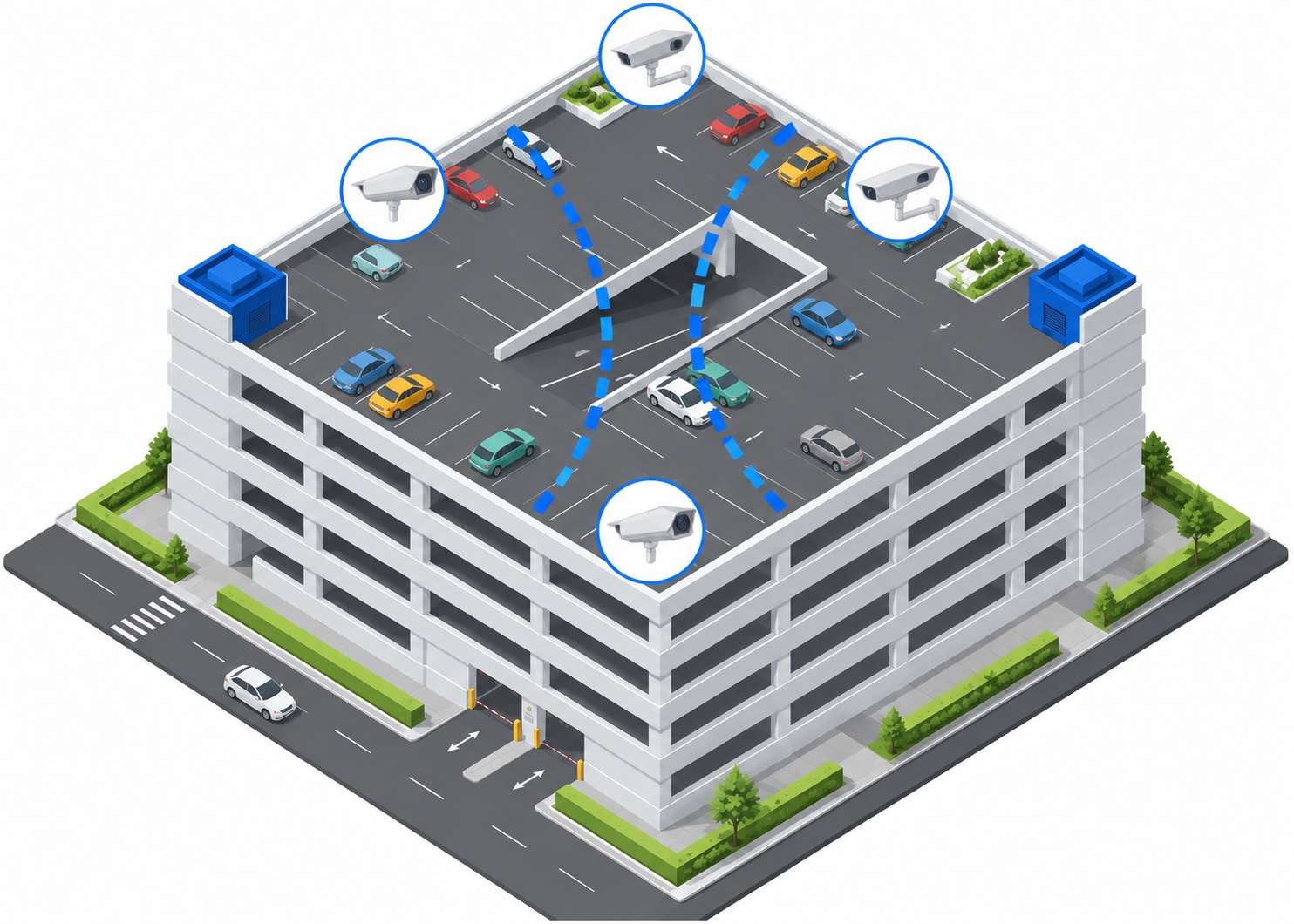
A security camera at the far end of a parking structure might seem like a relatively simple addition. But if that camera is more than 100 meters from the nearest telecommunications room, connecting it can create a much bigger infrastructure decision.
One solution is to add another telecommunications room. That can mean giving up usable floor area and adding power, cooling, pathways and other supporting infrastructure. In an existing facility, finding space for that infrastructure can be even more difficult.
In some situations, extended-reach (XR) copper cabling provides another option. It can allow certain devices to operate beyond the traditional 100-meter copper Ethernet limit without requiring additional telecommunications rooms or more complex infrastructure.
For facility and IT leaders, however, the question isn’t simply whether a cable can reach farther. It’s whether extended reach is the right solution for the project and what tradeoffs come with using it.
The 100-meter copper channel has long provided the telecommunications industry with a common performance baseline. Structured cabling is typically designed around a 90-meter permanent link and 100-meter channel, giving equipment manufacturers, designers and installers established parameters for reliable performance.
TEECOM designs within those standards whenever possible. But buildings don’t always fit neatly within them.
Consider a parking garage where security cameras need to be distributed throughout the structure. Some cameras may fall outside the service area of the nearest telecommunications room. Adding another room solves the distance issue, but it also requires space, power, cooling, pathways and additional construction.
On one project, conduit serving security cameras was embedded in concrete to protect the infrastructure and maintain the appearance of the garage. Structural requirements limited where conduit could be placed and how large it could be, creating cable routes that extended beyond the traditional distance limit.
That’s the type of situation where extended-reach passive cabling can be worth considering. Rather than allowing one connectivity challenge to drive a larger infrastructure addition, XR provides another option to evaluate.
It isn’t about exceeding 100 meters simply because the technology allows it. It’s about addressing specific cost, space and constructability challenges when the conventional solution isn’t practical.
Not every device beyond 100 meters is a good candidate for extended-reach copper. Distance, bandwidth and power all need to be considered together.
A simple dome security camera, for example, might require around 10 Mbps of bandwidth and less than 13 watts of power. With an appropriate extended-reach cable, an application like that may be able to operate beyond the standard 100-meter channel.
A Wi-Fi 7 access point presents a different scenario. It can require considerably more power while supporting much higher data rates. Trying to extend that connection over the same distance introduces more performance risk.
Generally, as bandwidth and power requirements increase, the viable distance for passive extended-reach copper decreases.
This is why claims about how far an XR cable can reach only tell part of the story. Facility and IT teams also need to understand what will be connected, how much power and bandwidth it requires, and whether the solution can reliably support it.
Extended-reach copper can help solve a project constraint, but going beyond the traditional channel also means leaving the performance envelope established by current industry standards.
For owners and IT teams, that introduces several questions.
How will the cabling be tested? There currently isn’t an industry-standard testing methodology for an extended-reach copper channel. Manufacturers may provide specific testing parameters for compatible test equipment, but those requirements need to be understood before installation and commissioning.
What does the warranty cover? Standard cabling warranties are built around standards-based applications. An extended-reach installation may require a specific manufacturer warranty with requirements related to the cable, connectors or channel configuration.
Is the cable category-rated? Some extended-reach products are independently tested and rated to Category 6 or Category 6A. Others are not. A cable may support a specific low-bandwidth, low-power application without meeting the category requirements an organization expects for its broader network infrastructure.
These aren’t necessarily reasons to avoid extended reach. They are factors that should be weighed against the potential cost and infrastructure savings.
The Telecommunications Industry Association (TIA) is working to bring more consistency to this area through TSB-5073, Guidelines for Supporting Extended Distance over 4-pair Balanced Twisted-Pair Cabling.
The initiative is significant because today’s extended-reach market relies heavily on individual manufacturers to define the capabilities and requirements of their products. TSB-5073 is intended to develop industry guidance for extended-distance applications and provide a more consistent framework for evaluating performance.
For facility and IT leaders, clearer guidance could make it easier to compare potential solutions, understand where extended-reach cabling fits within an infrastructure strategy and assess the risks associated with deploying it.
The guidance is still being developed, so project teams today still need to evaluate the specific cable, device, distance, bandwidth, power and manufacturer requirements for each application.
Passive copper isn’t the only way to extend network connectivity beyond 100 meters. Depending on the application, other options include solutions combining fiber and copper, specialized power delivery equipment or other extended-reach Ethernet technologies.
The decision shouldn’t start with a particular product. It should start with the project constraint.
What is driving the need to go beyond 100 meters? Would the conventional solution require additional telecommunications space or significant construction? What device needs to be connected, and what are its bandwidth and power requirements?
Answering those questions allows the project team to compare the cost, complexity and performance of the available options rather than automatically defaulting to additional infrastructure or using XR simply because it is available.
Standards-based network design should remain the starting point. The 100-meter channel provides the predictable performance and interoperability that facility and IT teams rely on.
But real-world conditions can create exceptions.
When a device falls beyond that limit, the answer doesn’t always have to be another telecommunications room or significant changes to the building. Extended-reach copper can provide another option, particularly for lower-bandwidth, lower-power applications where space, cost or constructability make the conventional approach difficult.
The value isn’t simply in reaching farther. It’s in understanding the available options and selecting an infrastructure approach that meets the technology requirements without creating unnecessary cost or complexity for the facility.
TEECOM develops ICT/telecom infrastructure strategies that support the foundational connectivity needs of the built environment. We work with project teams to design systems that enable voice, data, and converged communications across complex facilities. Early coordination helps ensure ICT/telecom systems are scalable, resilient, and aligned with long-term operational requirements. Contact us to learn more about how TEECOM can assist with ICT/telecom systems in your next project.
Mark Latz is Principal, Vice President at TEECOM with 40 years of experience delivering ICT and telecommunications solutions across a wide range of markets. In addition to leading TEECOM’s technical pursuit and quality control processes, Mark works closely with clients to understand their unique needs and develop technology strategies that support their goals. His extensive experience in technology infrastructure gives him a practical perspective on the evolving standards and solutions shaping the built environment.
Stay ahead of the curve with our latest blog posts on industry trends, thought leadership, employee stories, and expert insights.