The TEECOM Way: Insights From our Newest TEEm Members
What does it actually feel like to join a fully remote firm that operates at the gold standard of the industry...
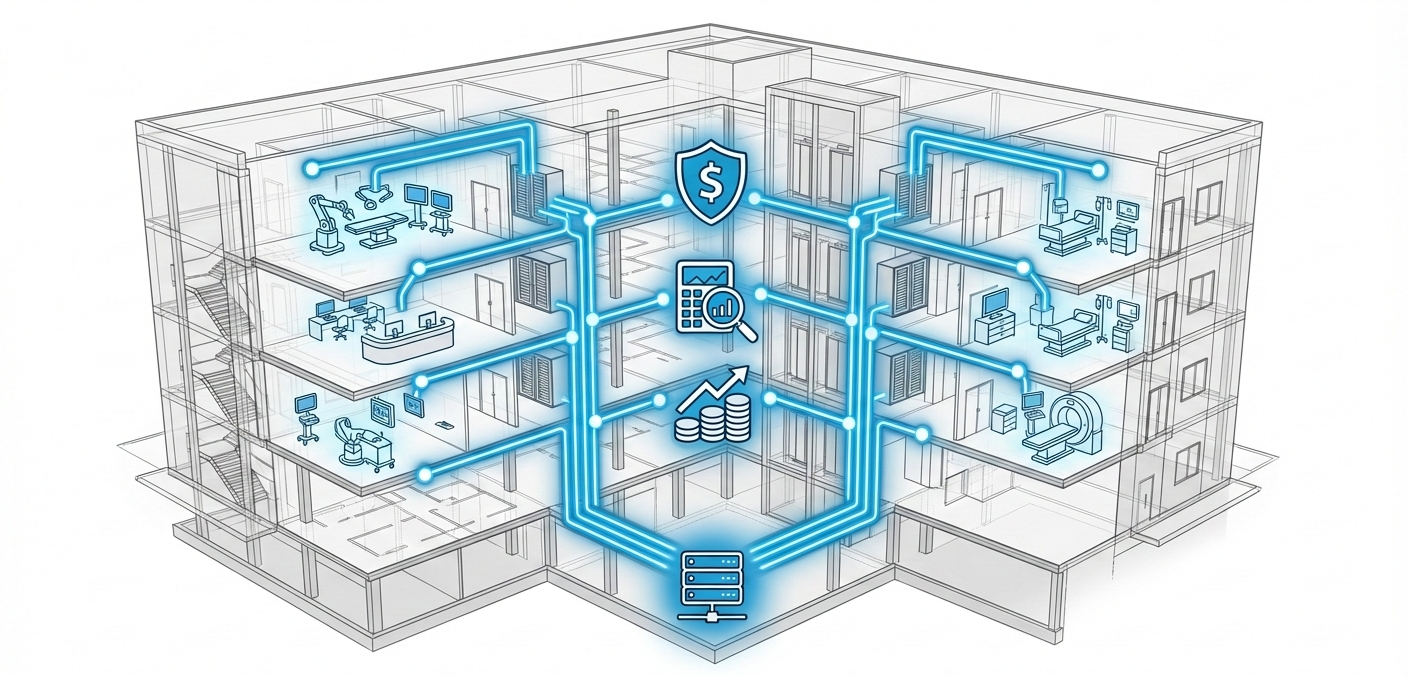
Technology has long been foundational to healthcare facility infrastructure, but its role has expanded significantly in recent years as systems become more integrated, intelligent, and essential to daily operations. And this is not solely because of AI tools and technologies being the new trend. Easy-to-use, thoughtful smart features have a significant impact on operational needs, such as staff retention and recruiting. A recent study reported that, “over 70 percent of all healthcare workers surveyed said software technology they like or are familiar with is an important factor when choosing whether to apply for or accept a healthcare job.” A majority of healthcare workers and patients will only interact with front-end technologies such as Electronic Health Records and Patient Engagement Systems. However, if the back-end infrastructure is not well planned and budgeted, it can divert dollars that a hospital would have spent on user-facing technologies. More and more hospitals are realizing the importance of their digital infrastructure. In a recent report published by the American Hospital Association, a central finding was the importance of modern information technology infrastructure for healthcare systems. Modern IT infrastructure can sound like an expensive investment. Still, it doesn’t always have to be the case, especially when the right people are brought in to help owners budget for their technology vision.
Building a hospital is no easy task and requires many complex disciplines to deliver the full design. Owners, architects, and MEP firms are often concerned with larger aspects of the building, and technology infrastructure can become an afterthought. While technology can be a small part of overall design, it can’t be pushed solely onto healthcare IT teams to handle. As the features of healthcare facilities become more reliant on network connections, the infrastructure supporting these technologies becomes more crucial and can become costly if not budgeted for correctly.
Technology consultants are an important part of the design team that help with creating accurate budgets. Technology consultants can gain a deep understanding of the facility’s and project’s goals by collaborating with owners and their IT groups. By working through these goals, consultants can help owners and their IT teams make informed decisions about which technologies are essential to achieving their goals, and which are optional or “nice-to-have.” Sometimes, budgets only allow for low-cost options. When that is the case, the thought arises that technology consultants are not necessary. However, even with lower budgets, technology consultants can help paint realistic pictures of a facility’s capabilities, helping avoid change orders and scope creep in later design phases or construction.
Technology consultants often have a broader view of the industry, and can provide expert advice from an external perspective. At TEECOM we advise owners and their IT groups on what’s working well for other successful hospital systems, or even analogous market verticals deploying with similar technology goals. We listen to our clients and apply the principles of demonstrating that we care, adding value, and building trust to strategize with our partners—aligning technology budgets while meeting the organization’s unit needs.
Engaging a technology consultant to review or create standards can help reduce overall technology budgets and create more predictable outcomes. In one recent engagement, we partnered closely with a client’s IT team after their executive leadership set an ambitious goal: reduce the technology construction budget by 25 percent.
Because of the trust established through years of successful project delivery, the client had confidence in our ability to guide them through that challenge. Our team carefully listened to the client’s needs and developed several cost-reduction options for consideration. These solutions included manufacturer and vendor recommendations, reductions in cabling per workstation, and alternative pathway system approaches. The client incorporated the strategies into their standards, and accomplished their goal to reduce the technology budget by 25 percent.
Our consultants are committed to supporting one another and our clients, and the diverse experience across our team enables the delivery of timely, innovative solutions. For this engagement, ideas were collaboratively developed in a matter of hours with healthcare subject matter experts from across the United States, resulting in effective outcomes for the client. Few firms can offer access to such a deep and accomplished pool of resources. TEECOM brings this same alliance of industry experts to help your organization achieve comparable results. To learn more about how our healthcare technology experts can support your project goals and objectives, contact us today.
Jason Norgan, PMP, RCDD, is a Principal Consultant at TEECOM with over two decades of experience with various low-voltage systems. He excels at working with clients to develop, refine, and deliver Information and Communication Technology (ICT) system designs for complex projects. Jason leads and mentors design teams on large-scale projects within the healthcare, workplace, education, mixed-use, transportation, and utility markets.
Stay ahead of the curve with our latest blog posts on industry trends, thought leadership, employee stories, and expert insights.