
What Field Experience Brings to Security System Design
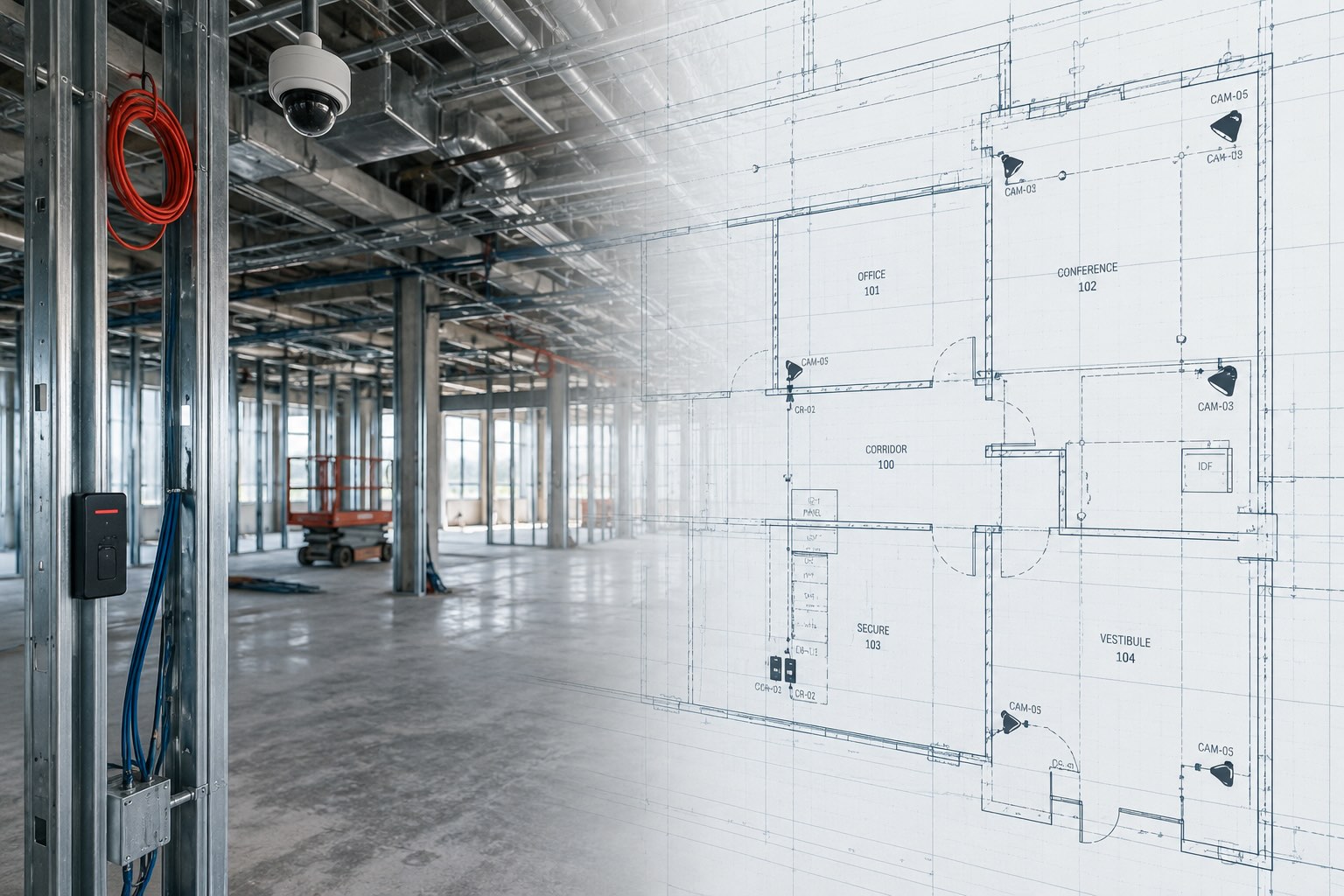
Field experience adds practical insight to security design, helping improve constructability, coordination and maintenance...
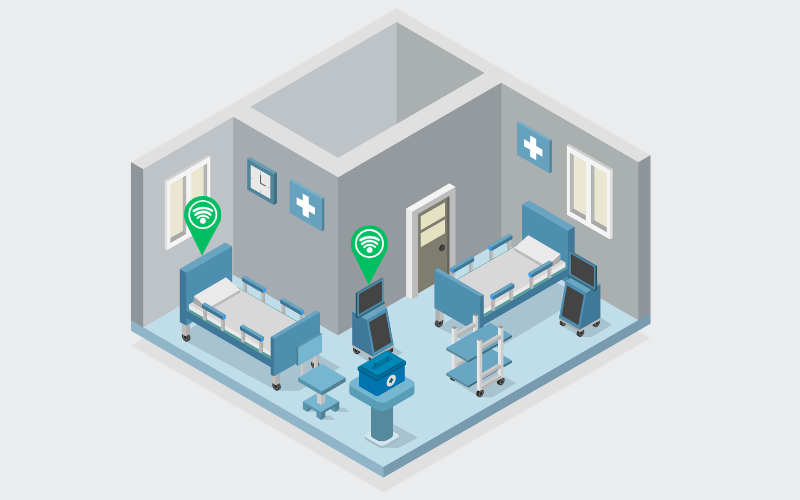
Real Time Location Systems (RTLS) are moving beyond simple “real-time” tracking to systems that support long-term hospital operations and clinical workflows.The narrative around how these systems are utilized in hospitals is moving from “what’s happening now” to predictive analytics and integrated facility management.This tool is becoming more crucial and integrated, and therefore needs careful consideration during the planning phase.Many times, RTLS vendors are selected before key factors are discussed with hospital stakeholders and design teams.Selecting the right RTLS vendor starts with three important discussions.
You’re reaching the point during the planning phase of your next healthcare facility where you need to select a nurse call vendor.You schedule demos with a couple of vendors and await being wowed by how their new systems utilize RTLS and have improved efficiencies in other hospitals.This is a common entry point because many modern nurse call systems now come with “native” RTLS capabilities, which often drives hospitals into a premature vendor selection before the broader facility needs are understood.
Fast forward to construction, and you realize you’re running out of space for cabling and may not have the staff to fully utilize all the bells and whistles of your new system.This is the “backward trap” of selecting RTLS solutions.Many people pick a manufacturer first and then fit their needs to the technology.Instead, this process should start with clearly defined operational goals, and then select vendors aligned with those goals.
Some common use cases for RTLS to consider include staff duress, asset and exit protection, and clinical workflows, such as automatic nurse registry or automated rounding logs.Highlighting these workflow improvements helps clinicians see the immediate value beyond just finding a lost IV pump.These will all vary based on the needs of your facilities, so performing thorough “Day in the Life” scenarios with a technology consultant can help you narrow down your facility’s specific needs.
Identifying the right partners and stakeholders to bring in during the early planning process, such as technology consultants, architects, IT, and clinicians, will help you paint a clearer picture of the infrastructure needed to support the technology workflows you want across the hospital.For instance, if your new RTLS solution requires a sensor in every patient room, it will necessitate additional cabling to each room.This can significantly impact the infrastructure required to run cabling throughout the building and the size of the racks in the technology rooms.
Modern RTLS often leverages the existing Wi-Fi system, which is also shared by medical equipment and other facility needs.These systems are processing increased quantities of data, and to work reliably, they need Wi-Fi networks that can support them.New facilities should aim for Wi-Fi 7 (or at least 6E) and ensure two Cat6A cables are run to every Wireless Access Point (WAP).This will ensure that data can be processed quickly and reliably throughout the facility.Notably, the transition to Wi-Fi 7 introduces Multi-Link Operation (MLO), which is a game-changer for latency-sensitive RTLS use cases such as staff duress.Since the WAPs will require two Cat6A cables, additional thought should be given to cabling pathways and technology rooms to ensure they have space to accommodate the additional cabling.
RTLS systems don’t just require Wi-Fi; many of them require infrared (IR) or sonar technology to support more localized needs.Wi-Fi alone often “bleeds” through walls and floors, making it insufficient for high-accuracy needs.IR has commonly been used as a secondary technology, but it is sensitive to light interference and direct sunlight.This is increasingly becoming a problem as modern design is encouraging more natural light in patient rooms to promote patients’ mood and healing process.Because of this, sonar or acoustic sensors have become a more common secondary technology.This presents a unique challenge, however, as sensor placement becomes increasingly important.These sensors are often placed in the ceilings, which is precious real estate for other building systems.If your RTLS workflow will require sonar sensors, careful coordination is needed early in the design phase to ensure precise placement and proper operation.
Another important aspect to consider is the interoperability of a particular vendor’s RTLS system.Most commonly, you will want to evaluate how deeply a vendor’s software integrates with your existing electronic health record, nurse call, and security systems.On the surface, it may look like all vendors can integrate with any system.However, closer examination may reveal that the integration only passes basic information and can’t drive complex processes, such as automatically canceling a nurse call when a provider enters the room.
Fortunately, limitations can sometimes be overcome by utilizing a robust middleware layer capable of translating those events in real-time.Evaluating whether direct integration is sufficient or if middleware is necessary to bridge the gap is a key area where a technology consultant adds significant value during vendor selection, ensuring the systems can actually communicate at the depth your workflows require.
Enterprise scalability is another important factor to consider.You will want to ensure that RTLS systems are seamless across large campuses so that staff badges work across different buildings without manual re-programming.
You may be asking yourself, why does my RTLS system need such extensive cabling?As we look to the future of data in hospitals, more systems will require higher-speed cabling to enable advances such as predictive analysis and digital twins.Hospitals have begun using data from their RTLS and ancillary systems to predict future delays.For instance, you can use staff presence data from the RTLS system to estimate operating room turnover times and improve overall clinical throughput.Additionally, there is an increase in providers using digital twins to create virtual models of entire facilities to test “what-if” scenarios.An example of this is using RTLS data within a digital twin to see how moving a waiting room location might improve patient traffic flow and decrease wait times.
All these efficiencies are enabled only because hospitals ensure their RTLS and other building systems are interconnected through a robust data cabling backbone.This is why doing thorough due diligence at the beginning of a project or retrofit is crucial.By bringing in stakeholders from IT, clinicians, nursing staff, security, architecture, technology consultants, and other key design professionals, you can get a clear picture of how you want your RTLS system to perform, saving time, budget, and resources later in the design process.
TEECOM has extensive experience in RTLS and other low-voltage technology systems, including nurse call, access control, video surveillance, and public address systems.Our team can help you evaluate your facility, define your goals, and select the right RTLS vendor to ensure that your system is designed to meet your specific needs.Reach out to us via our contact form to learn more about how we can help you design the foundation for your RTLS system.
Bryan Herrin is a Principal, Senior Consultant with over 30 years of experience designing and delivering low-voltage technology systems that enhance safety, efficiency, and performance in complex environments. He has focused extensively on healthcare, specializing in nurse call, access control, video surveillance, RTLS, and public address systems. His extensive background with major hospitals includes leading the nurse call system replacement at UCSF Parnassus Heights, which required deep investigation of existing conditions in an occupied facility, as well as the nurse call and security design for the UCSF Mission Bay Medical Center. He began his career in the U.S. Navy as an Electronics Technician aboard nuclear submarines, which laid the foundation for his disciplined and mission-focused approach.
Stay ahead of the curve with our latest blog posts on industry trends, thought leadership, employee stories, and expert insights.