Beyond 100 Meters: When Extended-Reach Copper Makes Sense
Extended-reach copper can help solve connectivity challenges beyond 100 meters. Explore the benefits, tradeoffs and options...
.png)
Security has become one of the most important considerations in how buildings are designed and operated. Beyond protecting assets or preventing incidents, effective security allows organizations to function confidently, safeguard their people, and maintain continuity when unexpected events occur.
When done well, security is almost invisible. It supports day-to-day activity without drawing attention to itself. It strengthens an organization’s ability to adapt, grow, and serve its people while ensuring that safety never feels restrictive. Finding a balance between protection and experience requires specialized knowledge, both technical and human.
A security consultant works with organizations to design, implement, and refine physical security systems that align with their operational goals. Their work begins long before equipment is selected or installed and starts with understanding how a space functions, who uses it, and what risks are most relevant.
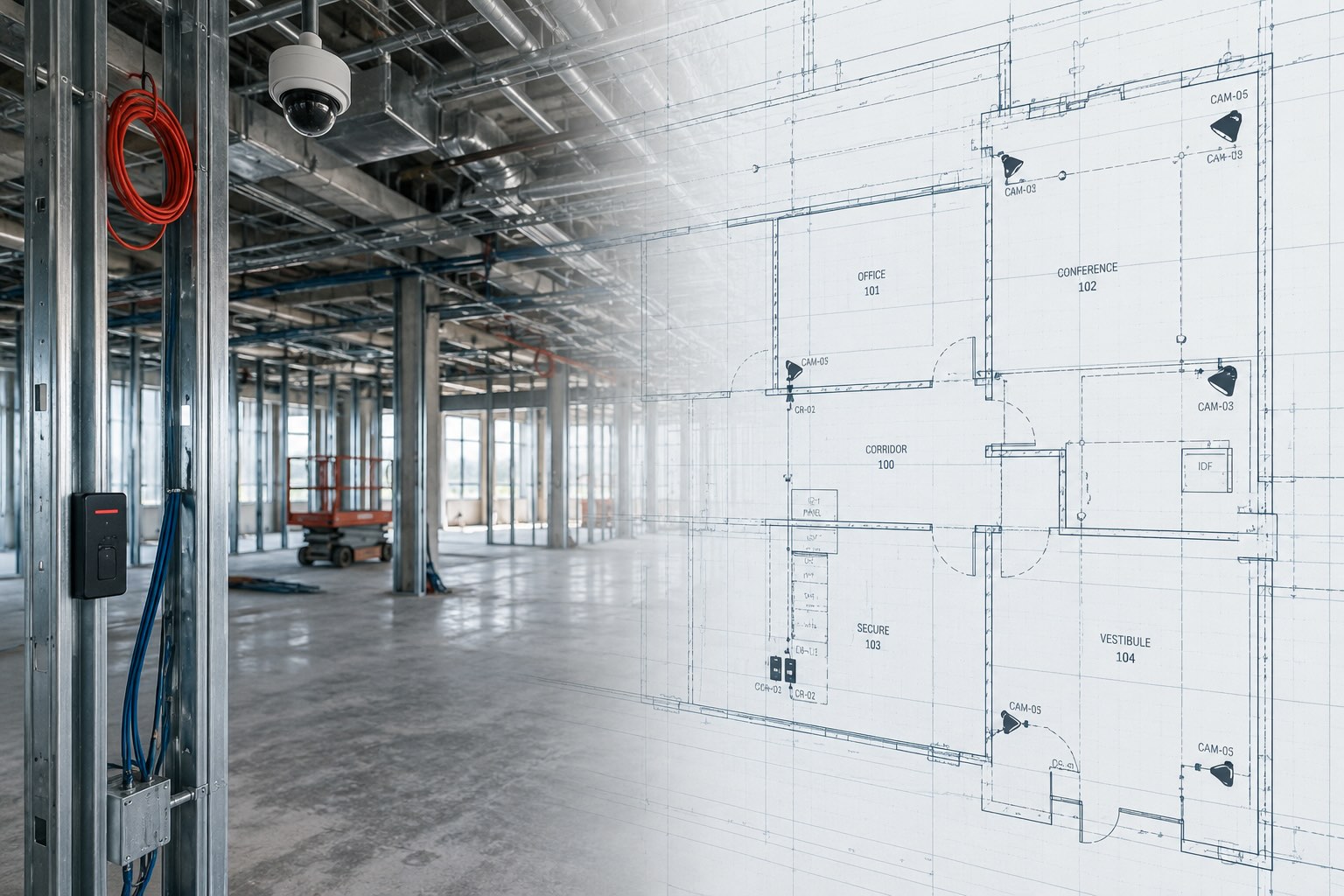
From early planning through construction and long-term operation, consultants ensure that security integrates with architecture and operations. When thoughtful design leads the process, systems such as access control, surveillance, and intrusion detection blend naturally into the environment.
Security technology changes quickly. Organizations today face a wide range of options, from cloud-based access control and mobile credentials to AI-driven analytics and integrated visitor management platforms. Selecting and coordinating these systems can be challenging without a clear strategy.
A consultant helps define what success looks like. Through risk assessments and performance criteria, they can identify solutions that fit the organization’s unique needs and budget. The goal is to design systems that are not over-engineered and are precisely aligned with the facility’s requirements.
Consultants also evaluate how technology interacts with people and space. Cameras, sensors, and readers are positioned for effectiveness but also for aesthetics and user comfort. A well-integrated system supports how people move and work, complementing the environment rather than overwhelming it.
Modern facilities rely on a variety of connected systems such as access control, video surveillance, intrusion detection, and building management. When these systems operate independently, data can be lost and response times slow. A consultant can ensure they communicate with one another, creating a cohesive system that supports monitoring, analytics, and coordination.
Security design should look towards the future anticipating expansion, new technologies, and ensuring systems can scale without major redesigns. Future-ready planning anticipates changes in technology, organizational structure, and threat landscapes to help save time and money while keeping operations resilient.
Security is often viewed as an expense, but when planned strategically, it becomes a long-term source of value. Consultants help organizations make informed decisions about what to upgrade, what to maintain, and what to retire.
Rather than replacing systems prematurely, consultants identify where optimization can extend performance. They also account for total lifecycle cost including installation, operation, maintenance, and eventual replacement, so that each dollar invested contributes to sustained performance and reliability.
An efficient design not only reduces costs but can also minimize downtime. For critical industries that depend on constant uptime, such as healthcare or data centers, even the slightest interruptions can have significant financial consequences.
Every organization faces its own mix of risks based on location, operations, and culture. Consultants help uncover potential risks before they become major incidents. Through assessments, interviews, and on-site observations, they map how threats could materialize and where defenses need strengthening.
Effective security goes beyond equipment. Design decisions like clear sightlines, controlled access points, and proper lighting can reduce risk as effectively as technology. When both physical layout and human behavior are considered together, the result is a layered approach that deters, detects, and responds efficiently.
Security systems often intersect with privacy and safety regulations, which vary widely by industry and region. From GDPR and HIPAA to building, fire, and electrical codes, staying compliant requires both technical and procedural understanding. Consultants interpret these requirements and ensure that each aspect of the security design, from the handling of data to the placement of devices, meets applicable standards. This protects organizations from risk while reinforcing trust among stakeholders who rely on secure, well-run environments.
Compliance should never be viewed as a checkbox item. It should be part of a broader culture of accountability and transparency that supports the organization’s reputation.
One of the most valuable roles of a consultant is objectivity. While product vendors and integrators may naturally promote certain brands or solutions, consultants work independently. Their responsibility is to the organization, not to a specific manufacturer.
This independence allows them to compare technologies, evaluate long-term compatibility, and recommend solutions that fit the clients’ unique needs. It also prevents organizations from being locked into systems that may limit future flexibility. The result is guidance based on performance and purpose rather than sales incentives, ensuring that decisions are made in the organization’s best interest.
No system is perfect, and no organization is immune to incidents, making a quick and effective response critical. Consultants design systems that detect issues early, communicate them clearly, and help teams respond in real time. Integrating tools such as access control, video analytics, and mass notification systems allows information to flow quickly to the right people.
It’s just as important to plan for how people respond. That includes how teams are trained, how responsibilities are shared, and how information moves during stressful moments. A clear, well-practiced response plan can reduce the impact of an incident and build confidence in the organization’s ability to handle future challenges.
Security is closely tied to operational continuity. A single incident can disrupt an entire organization. Consultants build redundancy and resilience into every design so that key systems remain functional even when something goes wrong. Power backups, network failovers, and remote monitoring capabilities ensure that protection remains active under stress. This focus on continuity keeps organizations running, protects their data, and sustains trust during crises.
Just as important, resilient design can still support accessibility. The best facilities create spaces that feel open and welcoming, while subtle layers of protection work quietly in the background to keep people safe.
Technology is just a single piece of a security strategy. How people experience security measures can determine their effectiveness. Overly restrictive environments can create frustration or encourage workarounds, while spaces that feel unmonitored can cause discomfort and uncertainty.
Applying the principles of Crime Prevention Through Environmental Design (CPTED) helps bridge this gap. By promoting natural surveillance, clear boundaries, and thoughtful lighting, CPTED enhances both safety and comfort. The aim is not to control behavior but to design environments that inherently support positive, secure interactions. Consultants who consider these human factors ensure that buildings remain inviting, inclusive, and functional while still protecting what matters most.
Hiring a security consultant is about more than protection. It’s an investment in long-term stability and trust. When security is designed with intention, it supports innovation, keeps people safe, and lets organizations focus on their goals instead of their risks. A consultant’s true value comes from creating harmony between technology and architecture, safety and design, and the people who use each space.
As risks continue to change, taking a proactive and integrated approach helps organizations remain confident, resilient, and prepared for whatever lies ahead. Security shouldn’t be a barrier. It should enable continuity, collaboration, and peace of mind.
At TEECOM, our security expertise is built on understanding how systems, people, and processes intersect in real environments. We help clients mitigate vulnerabilities not just by specifying technology but by performing holistic assessments and delivering system, people, and process recommendations to keep staff, visitors, and assets safe. Our engineers develop and refine security standards, guidelines, and detailed documentation while ensuring designs comply with relevant codes and regulations. We work across a wide variety of building interfaces, including IT networks, power systems, door hardware, elevators, parking controls, fire alarm systems, HR databases, and VoIP communications, to deliver cohesive and integrated security. Whether designing access control, intrusion detection, video surveillance, visitor management, or physical protective elements like gates and HVM solutions, we partner with you to build security that supports your mission rather than impedes it.
Stay ahead of the curve with our latest blog posts on industry trends, thought leadership, employee stories, and expert insights.