How Is Power over Ethernet (PoE) Shaping the Future of Smart Workplaces Across EMEA?
Explore how Power over Ethernet (PoE) is shaping smart workplaces across EMEA through connected lighting, sensors, AV, and building systems...
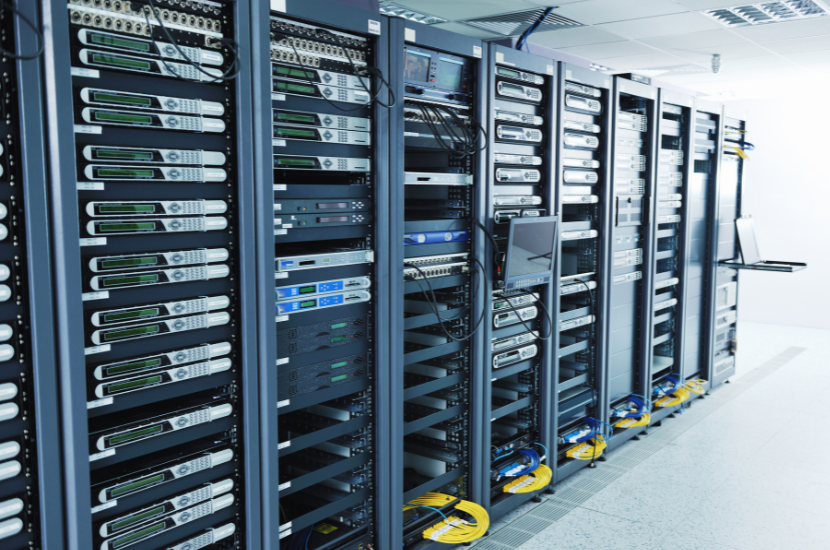
When organizations build or upgrade a server room, one of the most common and costly mistakes is underestimating the electrical power required to support both current and future needs. Cooling systems, uninterruptible power supply (UPS) units, redundancy strategies, and future scalability all add significant complexity to capacity planning.
Getting the calculations wrong creates immediate ripple effects: equipment overheating, crippling downtime, expensive retrofits, and hard limits on business growth. This is a foundational issue that requires a shift from relying on outdated assumptions to implementing rigorous, forward-looking engineering.
This blog explores why accurate power planning is essential, what factors are most often overlooked, and how TEECOM helps clients design server rooms that scale with confidence.
Too often, server rooms are sized using outdated rules of thumb. For years, it was common practice to assume a standard rack would draw no more than 5 to 15 kW. While that might have been adequate for traditional workloads, modern compute requirements, particularly those driven by Artificial Intelligence (AI) and High-Performance Computing (HPC), far exceed those legacy figures.
Another critical pitfall is planning strictly around a current server equipment list. Doing so ignores the supporting systems that also consume power, such as cooling and distribution, and critically overlooks redundancy requirements that can double infrastructure needs. The result is a facility designed for today’s racks but fundamentally unprepared for tomorrow’s necessary workloads. When a client only plans for the short term, they are inadvertently setting a cap on their own future capabilities.
We are in the middle of a major, irreversible shift in rack density. Many small and medium-sized organizations have historically planned for 20 to 50 kW per cabinet. By contrast, AI and HPC workloads are already requiring up to 150 kW per cabinet, with 250 to 300 kW cabinets appearing in vendor roadmaps for the next 12 to 24 months.
This represents a tenfold increase in density within a single hardware generation. A single GPU rack today may consume as much power as ten traditional storage racks. Without planning for this new reality, server rooms will run out of power capacity long before they run out of physical space. For a technology consulting firm, our mandate is to design for the life of the building, not just the current lease, and this power shift makes future-proofing more urgent than ever.
When engineers talk about “IT load,” they mean the direct power draw of servers, storage, and network equipment. But a true capacity plan must account for all necessary supporting loads. Neglecting secondary systems creates dangerous blind spots in the design.
The key to a successful design is to model both the IT load and the facility load together, using an integrated approach that eliminates gaps in the capacity forecast.
TEECOM begins every project by developing a deep understanding of the client’s use case and long-term technology roadmap. What workloads will the server room host on day one? What is the hardware refresh cycle? Will AI or HPC clusters be introduced within the next few years? These are questions that must be answered collaboratively, integrating IT, facilities, and executive insights.
From those answers, we create a preliminary cabinet layout that maps the likely mix of high-density and general-purpose racks. We then rigorously validate this against established vendor roadmaps. We typically recommend planning for a reasonable margin of spare capacity, often in the range of 20–25%, to accommodate near-term hardware evolution. The exact amount depends on the site, client objectives, and available power, but allowing room for growth helps avoid costly retrofits later. This approach ensures the baseline is not just a snapshot of today’s needs but a durable plan for future growth.
The chosen redundancy strategy has a major, often underestimated, impact on space, cost, and complexity:
Each step up in redundancy significantly increases the footprint of UPS equipment, switchboards, Power Distribution Units (PDUs), and battery arrays, driving up both capital and operational expenditure. Choosing the right redundancy model early in the schematic phase is vital to avoid costly redesigns and construction delays later on.
Even with a perfectly designed internal system, the ultimate constraint is often the utility feed or building service capacity. A 1,000 sf server room may have the physical space for dozens of racks, but the site might not be able to deliver the essential megawatts of power needed to run them.
Engaging the utility provider early in the process is not optional; it is critical. Confirming available capacity and upgrade timelines allows the design team to set realistic expectations for what the server room can truly support and help clients budget for necessary infrastructure upgrades.
The consequences of miscalculating power are severe, impacting both operations and the bottom line:
Because most buildings will be power-constrained before they are space-constrained, forecasting growth is essential. The most effective approach combines three key inputs into a unified model:
From this model, TEECOM reserves space and pathways for future UPS and cooling equipment, enabling staged upgrades without ever requiring a room shutdown.
Our proactive, collaborative process is designed to prevent costly surprises and ensure maximum scalability:
This collaborative, proactive approach ensures TEECOM’s clients avoid the pitfalls of underestimating power while keeping all options open for a dynamic, growing business.
Accurate power planning is arguably the single most critical aspect of any server room project. With AI and HPC driving densities into the hundreds of kilowatts per rack, the days of sizing to legacy rules of thumb are definitively over. The good news: with careful forecasting, early utility engagement, and a proactive design process, organizations can build server rooms that operate reliably today and scale confidently for tomorrow.
TEECOM’s technology consultants are uniquely positioned to bridge the gap between IT requirements, facilities constraints, and long-term business strategy. We begin by translating your current and future computational workloads, whether general-purpose, AI, or HPC, into precise power models. By engaging with your utility provider and MEP partners early, we set a defensible baseline and design staged power expansion paths that save millions in emergency retrofits. Our proactive design process ensures your server room is a resilient asset that scales alongside your business growth, not a bottleneck that limits it.
Jason Cummings, PE, RCDD, CDT, is a Principal, Senior Consultant at TEECOM. As a highly experienced Professional Engineer and ICT designer, Jason has obtained vast knowledge and expertise in the design and engineering of complex technology systems for global project expansions over his 20-year career. He is dedicated to understanding his client’s precise needs to provide the best, most scalable technology solution possible.
Stay ahead of the curve with our latest blog posts on industry trends, thought leadership, employee stories, and expert insights.