What Field Experience Brings to Security System Design
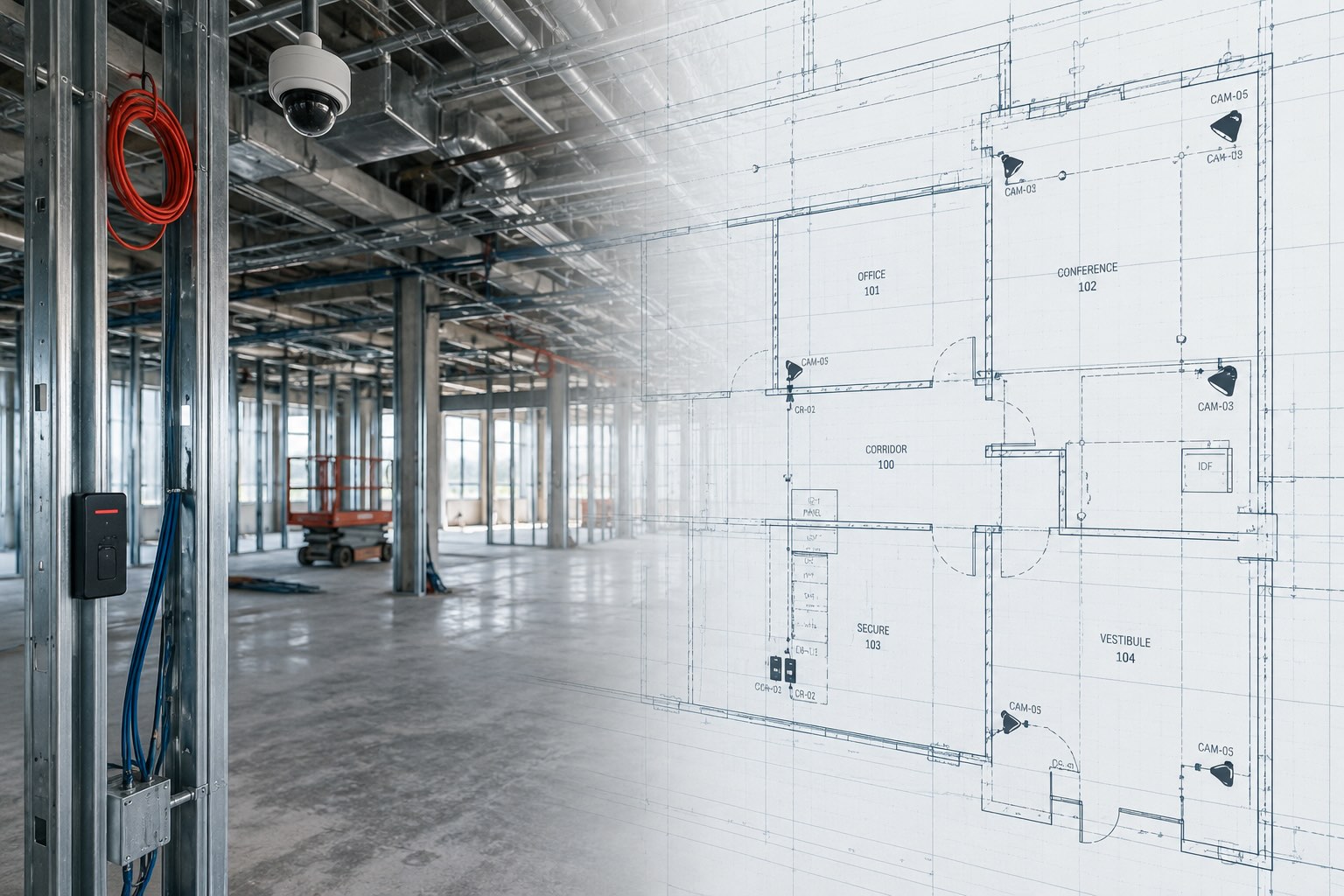
Field experience adds practical insight to security design, helping improve constructability, coordination and maintenance...
If you walk the floor of any major technology trade show today, you’ll notice a surge of innovation across AI and computer vision in the commercial workplace market. New tools are emerging rapidly, each offering meaningful opportunities to improve how organizations operate, collaborate, and understand their environments.
At the same time, many of these solutions are designed to solve specific parts of a larger challenge. When viewed individually, they can deliver strong results—but realizing their full value requires a more holistic strategy. Without that broader alignment, even promising technologies can remain in extended pilot phases, limiting their ability to scale and deliver long-term ROI. To identify the value of these technologies, the market is increasingly shifting toward a more integrated approach. Success is less about any single tool and more about designing with the end in mind—prioritizing interoperability, scalability, and clearly defined outcomes from day one.
The biggest hurdle preventing commercial clients from moving a pilot into a full-scale, cost-effective deployment is rarely the technology itself. It is the underlying architecture. Most AI startups succeed in a vacuum. They can prove a concept in a single room or a controlled headquarters environment because the variables are limited.
However, the moment that isolated success is plugged into a global enterprise architecture, the lack of a scalable foundation becomes apparent. When an organization moves from managing a single pilot building to a global portfolio of 50 or 100 sites, complexity scales exponentially. A solution that works in San Francisco may encounter unforeseen hurdles in London or Singapore due to regional variations in network capacity, edge compute requirements, or local cybersecurity governance.
To escape the infinite pilot, organizations must shift their perspective from “What can this tool do?” to “How will this tool live within my ecosystem?” Three primary drivers can determine whether a pilot will sink or scale:
The most successful technology deployments begin with a clearly defined end goal—before the first sensor is installed. Early, “day zero” engagement gives organizations the opportunity to align technology decisions with business outcomes from the outset. It allows teams to assess network readiness, cybersecurity protocols, and data architecture upfront, ensuring that new solutions are built on a strong and secure foundation.
Taking this approach also encourages a more informed evaluation of emerging technologies. TEECOM looks at the technology stack, the vendor’s funding, and their patent portfolio. We treat the implementation of AI not as a trial, but as a strategic investment in the building’s infrastructure. By designing for the enterprise rather than the experiment, we help our clients move beyond the infinite pilot and into a resilient, scalable future.
The modern workplace is evolving rapidly as organizations balance hybrid work, employee experience, and real estate efficiency. TEECOM partners with corporate real estate, IT, and facilities teams to design integrated workplace technology strategies that support collaboration, streamline operations, and deliver a consistent user experience across offices. Our experts align acoustics, audiovisual, ICT/telecom, network, security, and wireless systems with business goals to create workplaces that are adaptable, efficient, and ready for the future of work. To learn more about how our workplace technology experts can support your project goals and objectives, contact us today.
Jordan Rivchun, Principal, Vice President of Client Relations, leads strategic client engagement and growth across the commercial, workplace, and enterprise markets. For over 20 years, his work has focused on aligning technology and the built environment with practical business and operational outcomes. Jordan is relied on by clients and peers for clear judgment, practical experience, and long-term thinking, shaped by time spent on both the operator and manufacturer sides of the industry.
Stay ahead of the curve with our latest blog posts on industry trends, thought leadership, employee stories, and expert insights.